Wood
The Woods Used in the Making of Native American Flutes
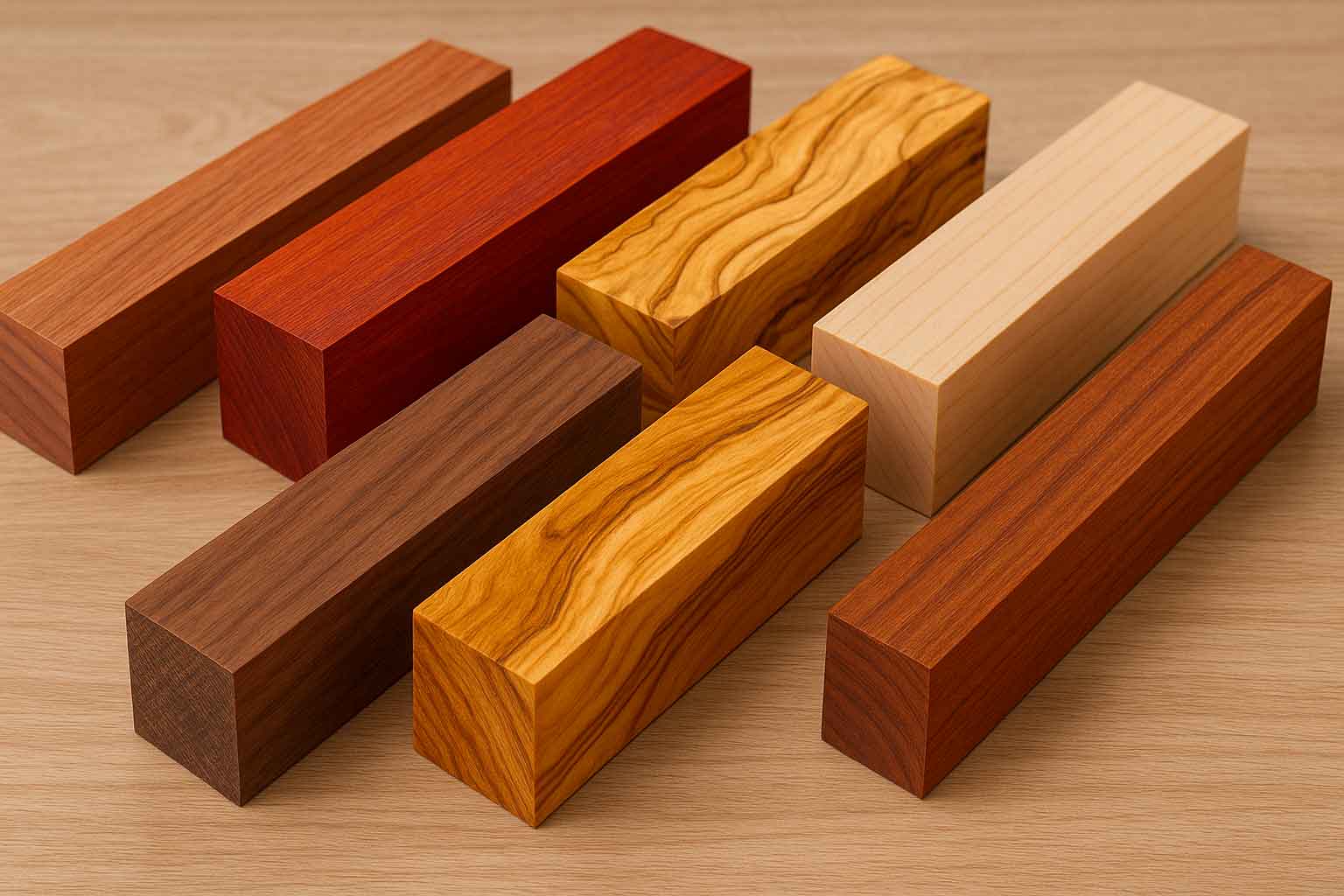
Red cedar, walnut, maple, Provence cane, oak, olive, padauk: each wood species gives the Native American flute its own unique sound, energy, and symbolism.
Introduction
Each handcrafted Native American flute is unique. But what truly makes it special is above all the wood from which it is shaped. The choice of wood influences the sound, the vibrational energy, the feel, and even the spiritual intention of the instrument.
In this article, discover the most commonly used wood species in my Native American flute making, along with their acoustic, symbolic, and aesthetic characteristics.
🪵 Why is the choice of wood so important?
In the Native American tradition, wood is a living being. Each species conveys:
- A unique sonic vibration
- A connection with the natural elements
- A spiritual message specific to the tree
A craftsman does not choose wood at random: he listens to the breath of the tree to transform it into a sacred voice.
🌲 Red Cedar – The sacred essence par excellence
- Sound: warm, soft, round
- Energy: soothing, spiritual
- Appearance: red/orange tones, elegant grain
Symbolism: sacred wood used in purification rituals. Connection to the spiritual world. Promotes meditation and introspection.
🌳 Walnut – Power, clarity, and grounding
- Sound: clear, balanced, powerful
- Energy: stability, depth
- Appearance: dark brown, very aesthetic
Symbolism: tree of knowledge. Promotes concentration and alignment.
🍁 Maple – Brightness, precision, lightness
- Sound: bright, lively, dynamic
- Energy: clarity, freshness
- Appearance: light wood to golden blond
Symbolism: symbol of rebirth and balance. Brings a joyful and solar energy.
🎋 Provence Cane – Natural breath and lightness
- Sound: soft, fluid, ephemeral
- Energy: airy, natural
- Appearance: light beige, natural texture
Symbolism: connected to the breath of the wind. Promotes lightness and intuition.
🌳 Oak – Wisdom, robustness, and resonance
- Sound: deep, powerful, woody
- Energy: grounded, ancestral
- Appearance: light brown to golden, pronounced grain
Symbolism: tree of wisdom. Bearer of inner stability. Promotes grounding practices.
🌿 Olive – Harmony, peace, and meditation
- Sound: soft, muted, harmonious
- Energy: soothing, pacifying
- Appearance: beige marbled with dark brown
Symbolism: wood of peace and light. Perfect for introspective playing.
🔥 Padauk – Intensity, creativity, and sacred fire
- Sound: clear, precise, punchy
- Energy: fire, activation, creativity
- Appearance: bright red to coppery brown
Symbolism: wood of expression and creation. Activates the root chakra.
🪶 Comparative table of wood species
| Wood | Sound | Energy | Ideal for... |
|---|---|---|---|
| Red cedar | Soft, enveloping | Spiritual | Meditation, beginners |
| Walnut | Rich, powerful | Deep | Sound therapy, advanced players |
| Maple | Clear, lively | Luminous | Outdoor, improvisation |
| Provence cane | Light, fluid | Natural | Intuition, children, relaxation |
| Oak | Deep, woody | Grounded | Grounding, inner strength |
| Olive | Muted, soft | Harmony | Meditation, introspection |
| Padauk | Dynamic, bright | Creativity | Artistic expression |
🎯 How to choose your wood wisely?
Here are some criteria to guide you:
- Your goal: relaxation, concert, healing?
- Your level: beginner or advanced?
- Your feeling when touching and hearing the sound
🔗 Read also: Wooden flutes vs. Provence cane flutes – full comparison
🎁 Discover our available handcrafted flutes
Hesitating between cedar, walnut, or olive? Discover our selection of handmade Native American flutes in various woods and tunings.
See the full collection Create your custom flute
Conclusion
Wood is the soul of the flute. It gives it its voice, its vibration, its character. Taking the time to understand each species is honoring nature and choosing the instrument that resonates with you.
👉 At Leza Art, each flute is created with intention, respect, and listening to the wood. 🌿
Every flute is unique — once it's gone, it's gone.