Wood
Wooden Flutes vs. Provence Cane Flutes: The Complete Comparison
Noble wood or Provence cane? Detailed comparison of the two materials: sound, aesthetics, weight, durability, to choose the flute that matches your musical sensibility.
Introduction
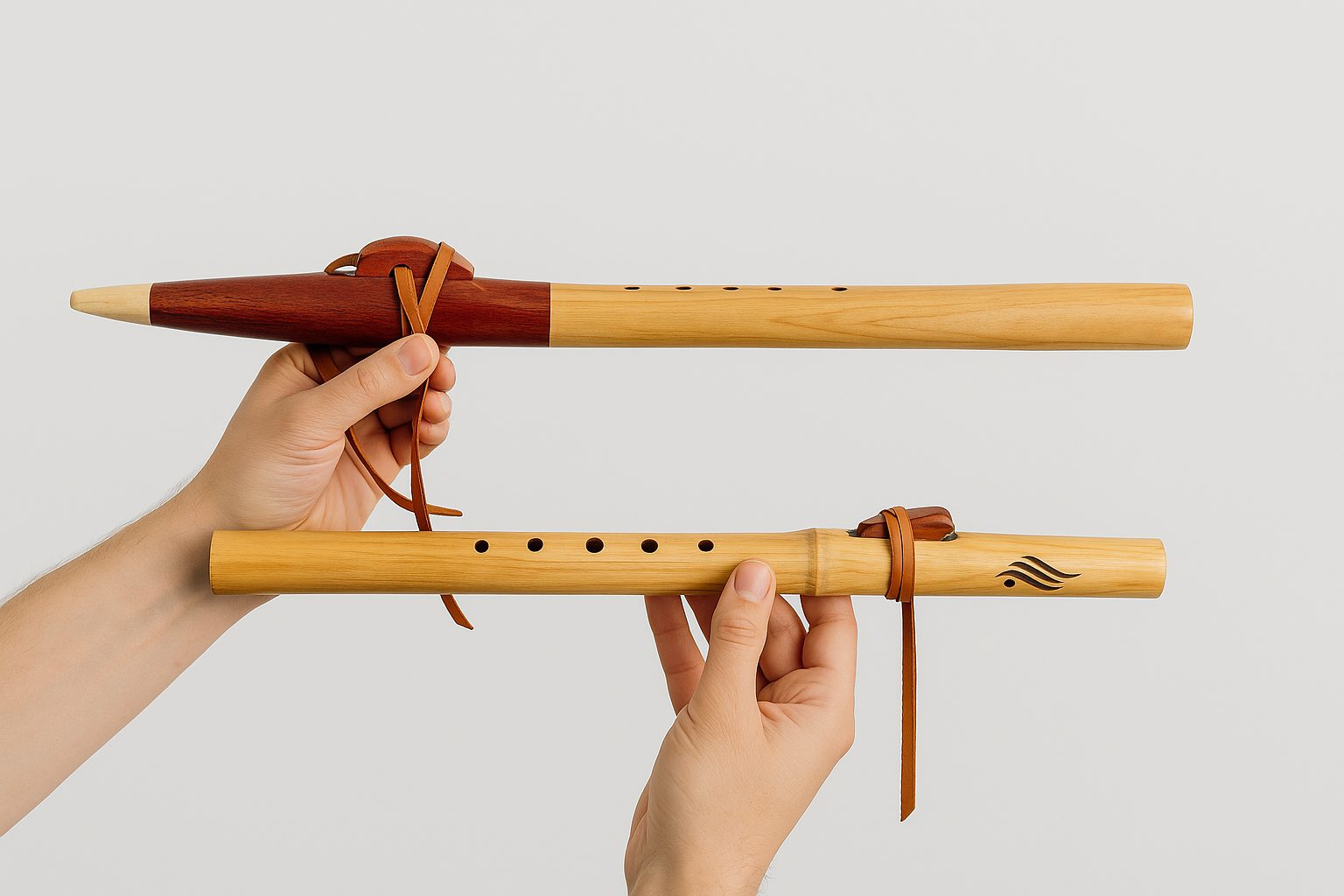
When you want to acquire a handcrafted Native American flute, a crucial choice arises: which material to choose? Noble wood or Provence cane? Each material offers a unique sound, a different feel, and its own musical ambiance.
In this article, we compare these two types of flutes in detail to help you choose the one that best matches your musical sensibility.
🌳 Wooden Flutes: Nobility, Depth, and Tradition
Wooden flutes are the most common in handcrafted manufacturing, with woods such as:
- Red Cedar: soft, warm, very spiritual
- Walnut: brighter, with a precise attack
- Maple: luminous, perfect for outdoor play
🎵 Acoustic Characteristics
- Sound: deep, warm, round
- Resonance: excellent, rich in harmonics
- Projection: suited for solo or small group play
✅ Advantages
- Durable and traditional craftsmanship
- Great tonal richness
- Natural and refined aesthetics
❌ Disadvantages
- Heavier weight
- Requires good maintenance against humidity
🎋 Provence Cane Flutes: Lightness and Natural Breath
Provence cane (a variety of giant reed) has been used since antiquity to make flutes. In the Native American world, it has been adopted to create light, intuitive, and minimalist instruments.
🎵 Acoustic Characteristics
- Sound: lighter, soft, and airy
- Resonance: shorter, more direct
- Projection: ideal for intimate or meditative play
✅ Advantages
- Very light in hand
- Easy to handle, even for children
- Natural vibrations of the material
❌ Disadvantages
- Less sound depth
- More fragile than wood
- Sensitive to humidity and temperature variations
🔍 Comparison Table
| Criterion | Wooden Flute | Provence Cane Flute |
|---|---|---|
| Sound | Rich, deep | Soft, light |
| Aesthetics | Handcrafted, noble | Natural, raw |
| Weight | Medium to heavy | Ultra light |
| Durability | Very good (if well maintained) | Average (fragile) |
| Recommended audience | Motivated beginners, musicians | Children, meditators, minimalists |
🎯 Which Flute Is Right for You?
| You are... | Recommended Choice |
|---|---|
| A musician or sound enthusiast | Noble wooden flute (cedar, walnut, etc.) |
| A complete beginner in music | Light Provence cane flute |
| A meditator or therapist | Both, depending on the sound ambiance |
| A lover of beautiful handcrafted objects | Carved wooden flute |
Conclusion
There is no wrong choice, only a personal choice based on your relationship to sound, material, and musical practice. Wooden flutes offer power and depth, while Provence cane flutes charm with their natural lightness and simplicity.
👉 The ideal? Try one of each, or even combine them in your musical practice.
Every flute is unique — once it's gone, it's gone.