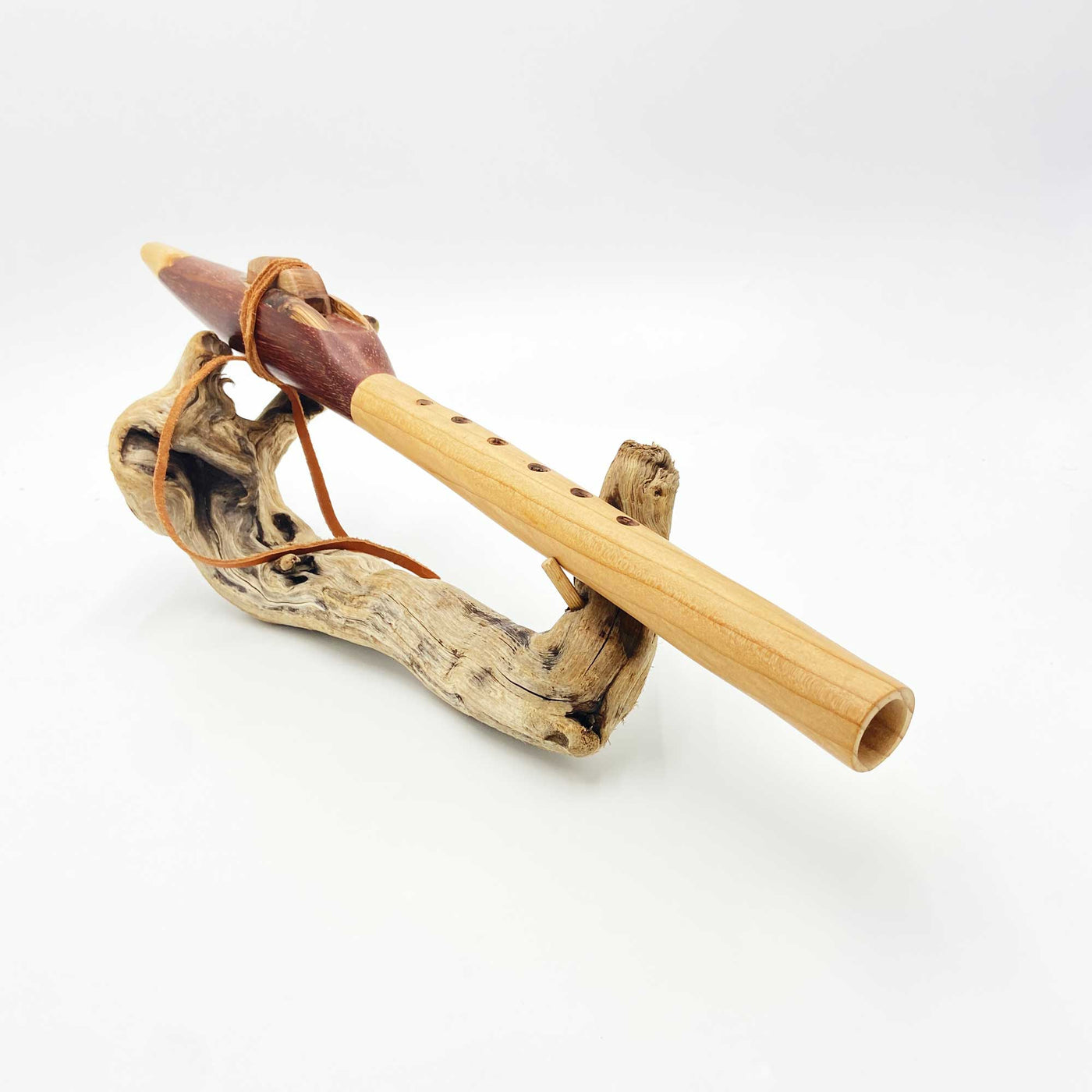
Cedrus
Cedar
Light and fragrant, cedar responds quickly: a clear, soft, enveloping breath. Ideal for a first flute as well as for long meditations.
Soft & aromatic wood
The workshop
Every flute begins with a meeting between a material, a breath, and patient hands. Welcome to the workshop.
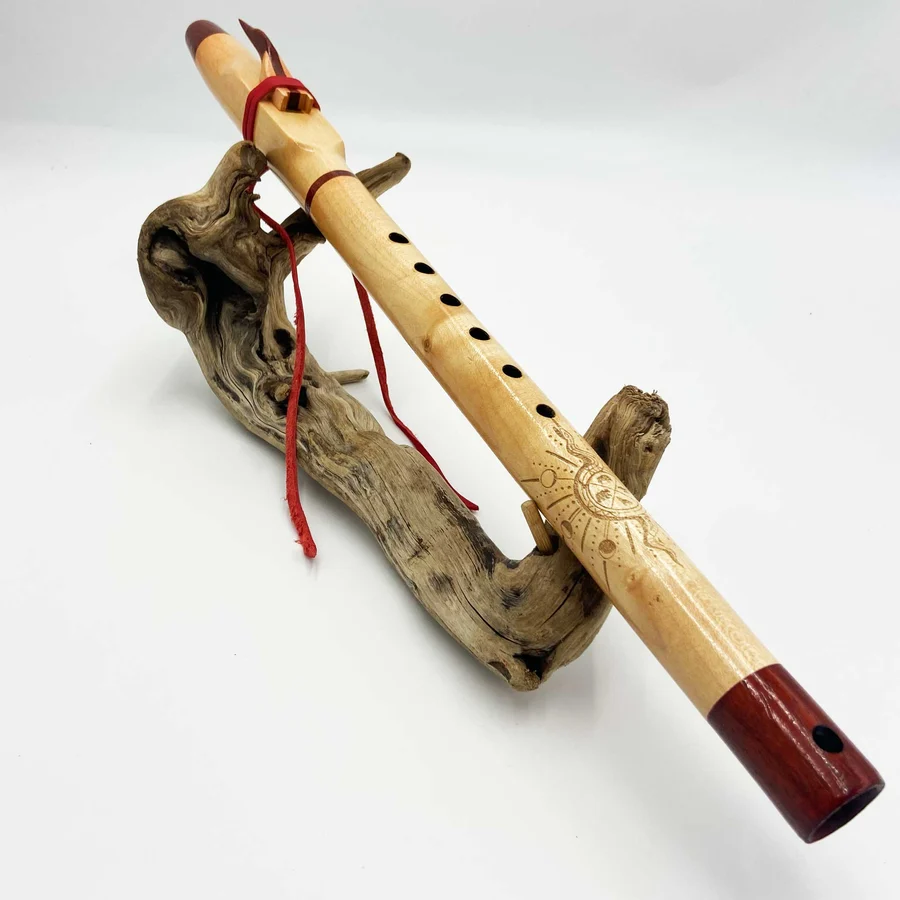
A discovery
I discovered the Native American flute during a self-expression workshop built around the instrument. A few notes were enough: breath settles differently on it. Lower, slower — as if the instrument asked first to be listened to, before it would speak.
I spent months making them for myself alone: rough drafts, failures, almost-flutes. Then I started making them for others. Every time, the same lesson — it isn't the wood that makes the music, it's the meeting between the wood and a breath.
Since then, the workshop has been shaping one-of-a-kind pieces, each tuned by ear to 432 hertz: a frequency often associated with calm, well suited to the slowness of meditation.
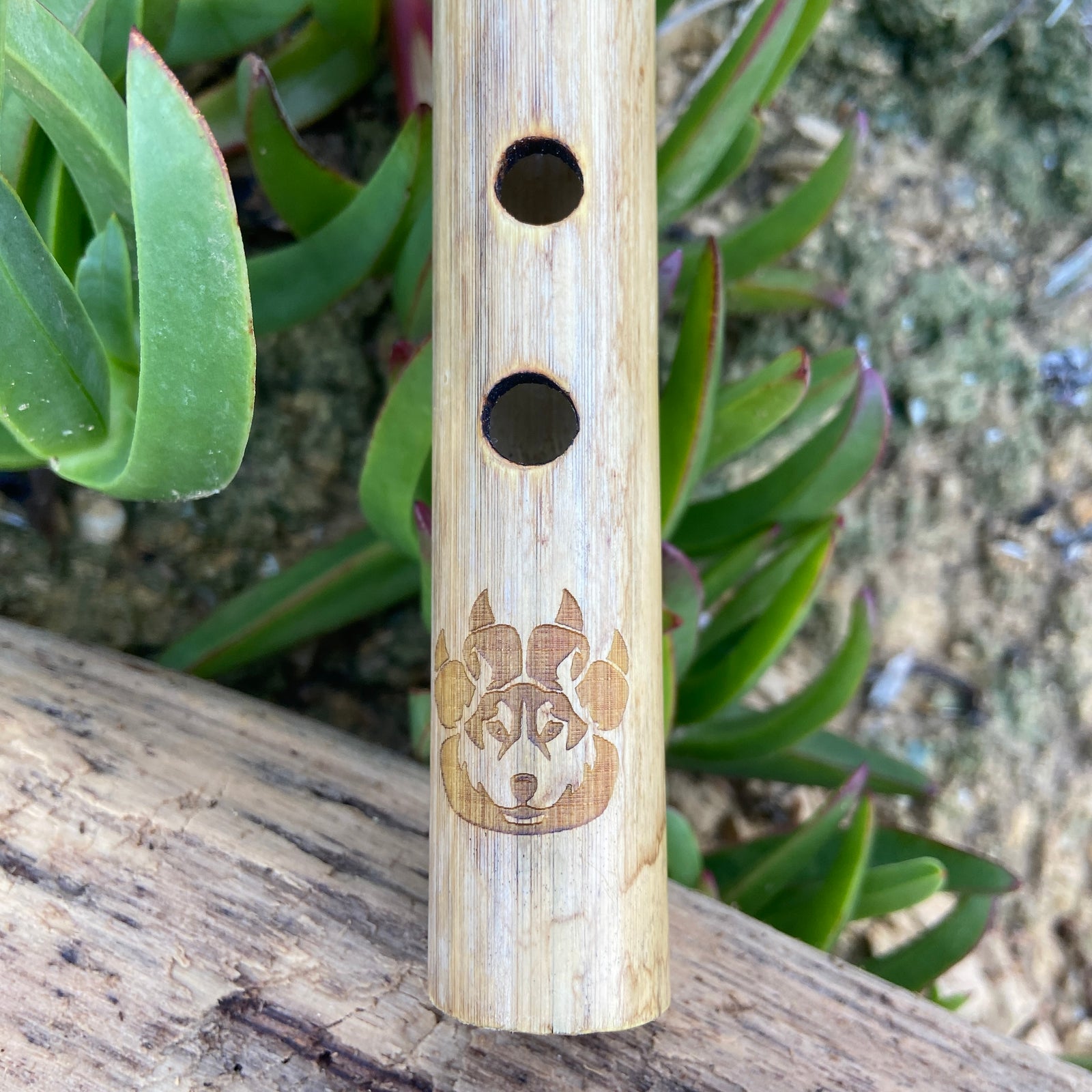
The materials
Each wood has its own character, colour, and voice. The workshop works with four materials, each chosen one at a time and listened to before being shaped.
Cedrus
Light and fragrant, cedar responds quickly: a clear, soft, enveloping breath. Ideal for a first flute as well as for long meditations.
Soft & aromatic wood
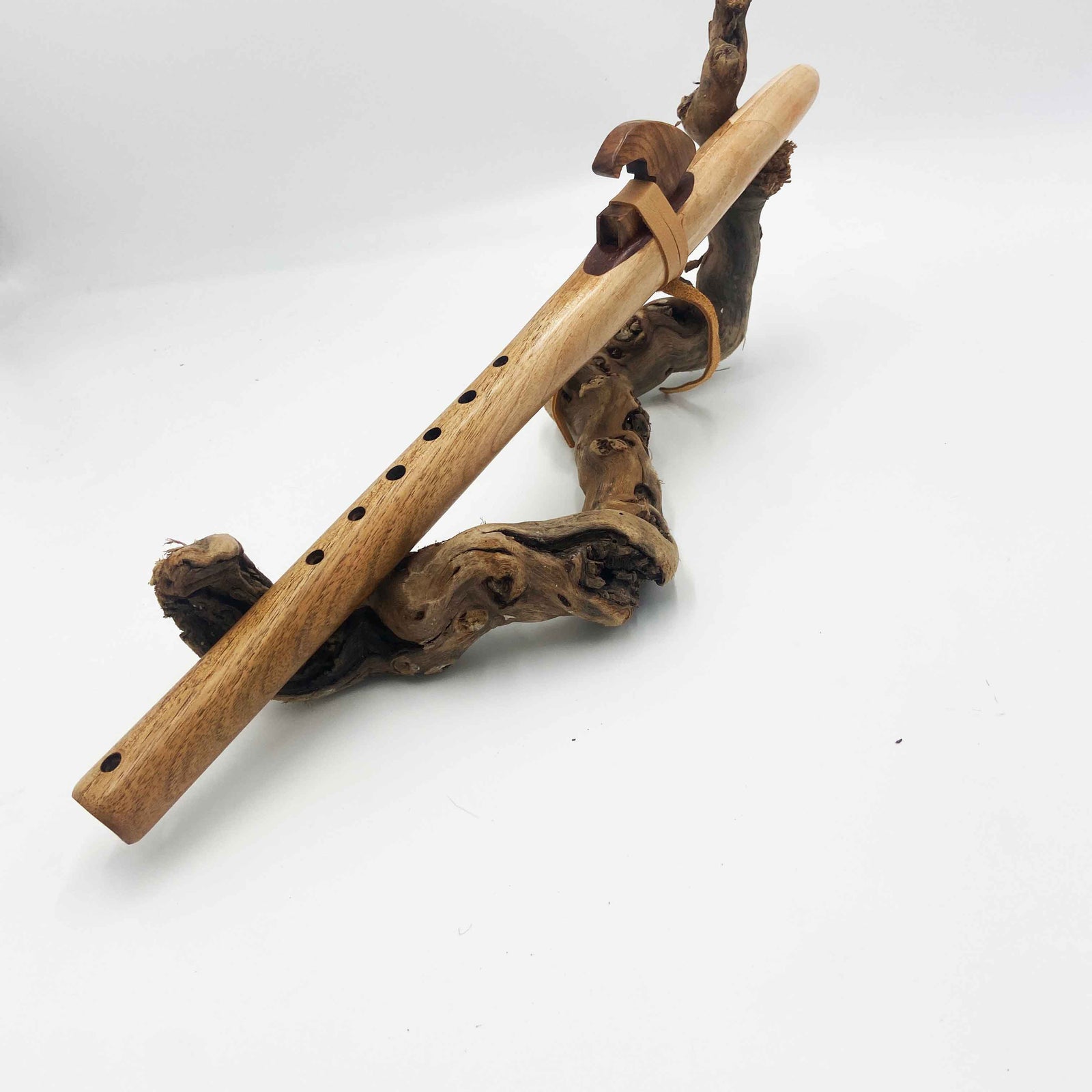
Juglans regia
Dense and deep, walnut colours the note with a warm richness. It is polished slowly, grain by grain, until it becomes almost as smooth as stone.
Dense & deep wood
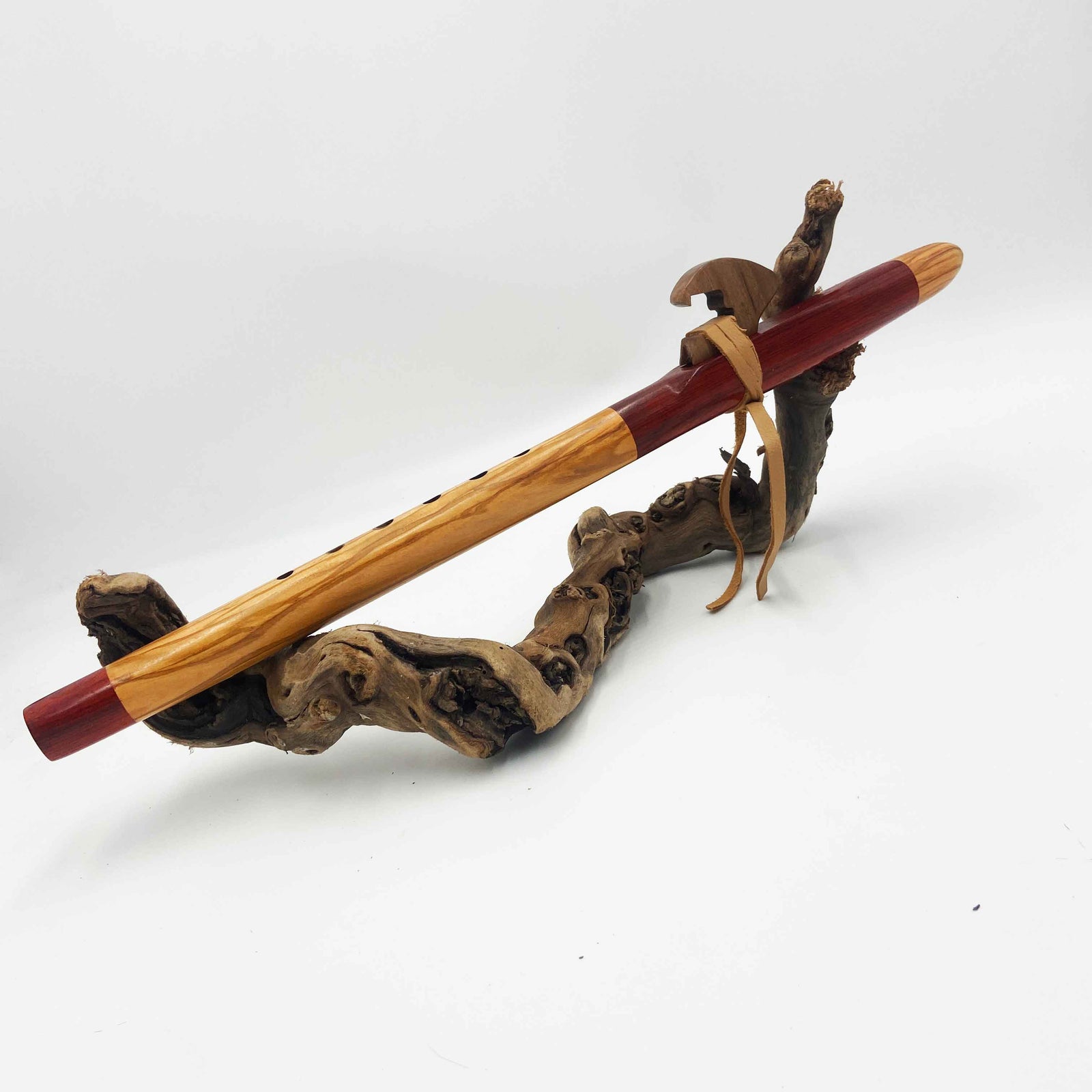
Olea europaea
The quintessential wood of Provence: veined, hard, precious. Every olive branch tells decades of sunlight — and the flute keeps that memory.
Precious & veined wood
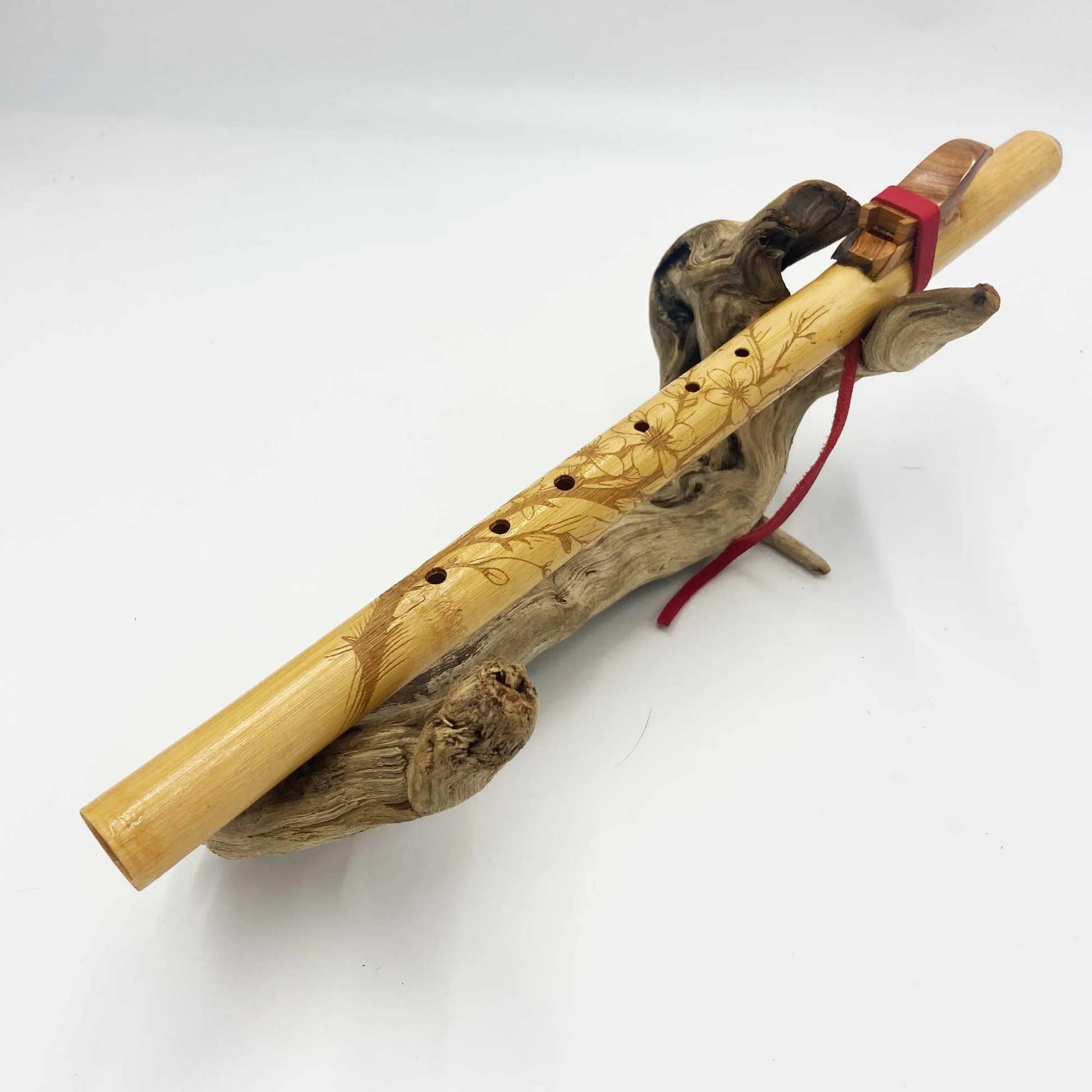
Bambusoideae
Light and resilient, bamboo rings out clear and bright. A living material, quick to grow, slow to tame — and one that travels very well.
Living & resonant material
The workshop in three moves
Shape. Drill. Tune. Three gestures, a thousand decisions — and a lot of silence in between.
The profile is born from the raw block. Drawknife, gouge, scraper: slow gestures, precise pressure. The wood responds, lets itself be guided — or resists, and it is right to.
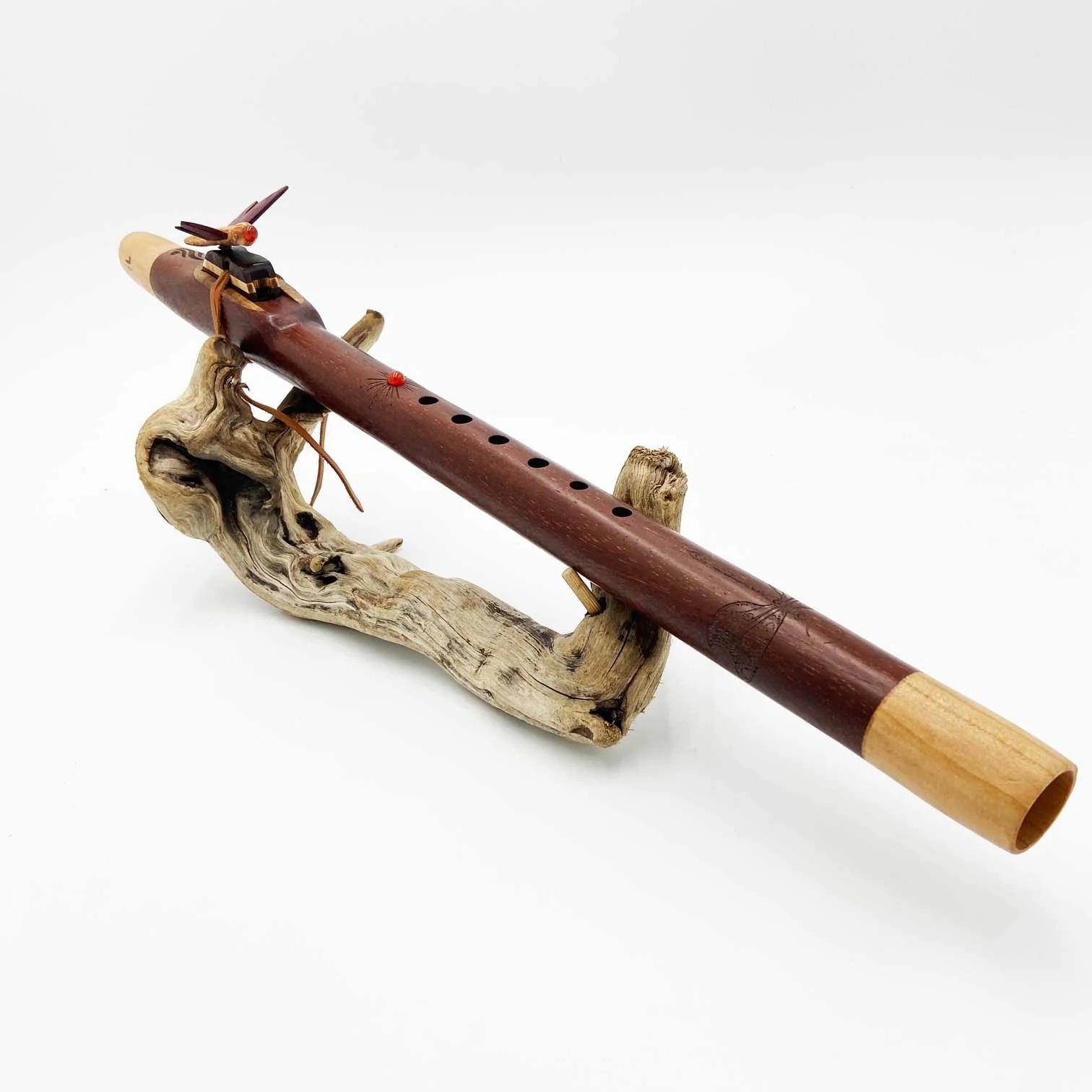
The drill passes through the material, but it's the ear that leads. Thickness, diameter, position: every millimetre decides the timbre. You don't just bore into wood, you listen to it.
Then comes the moment of the first breath. You adjust, you listen, you start again — until the note settles, true and calm. Each flute is tuned to 432 hertz, one at a time.
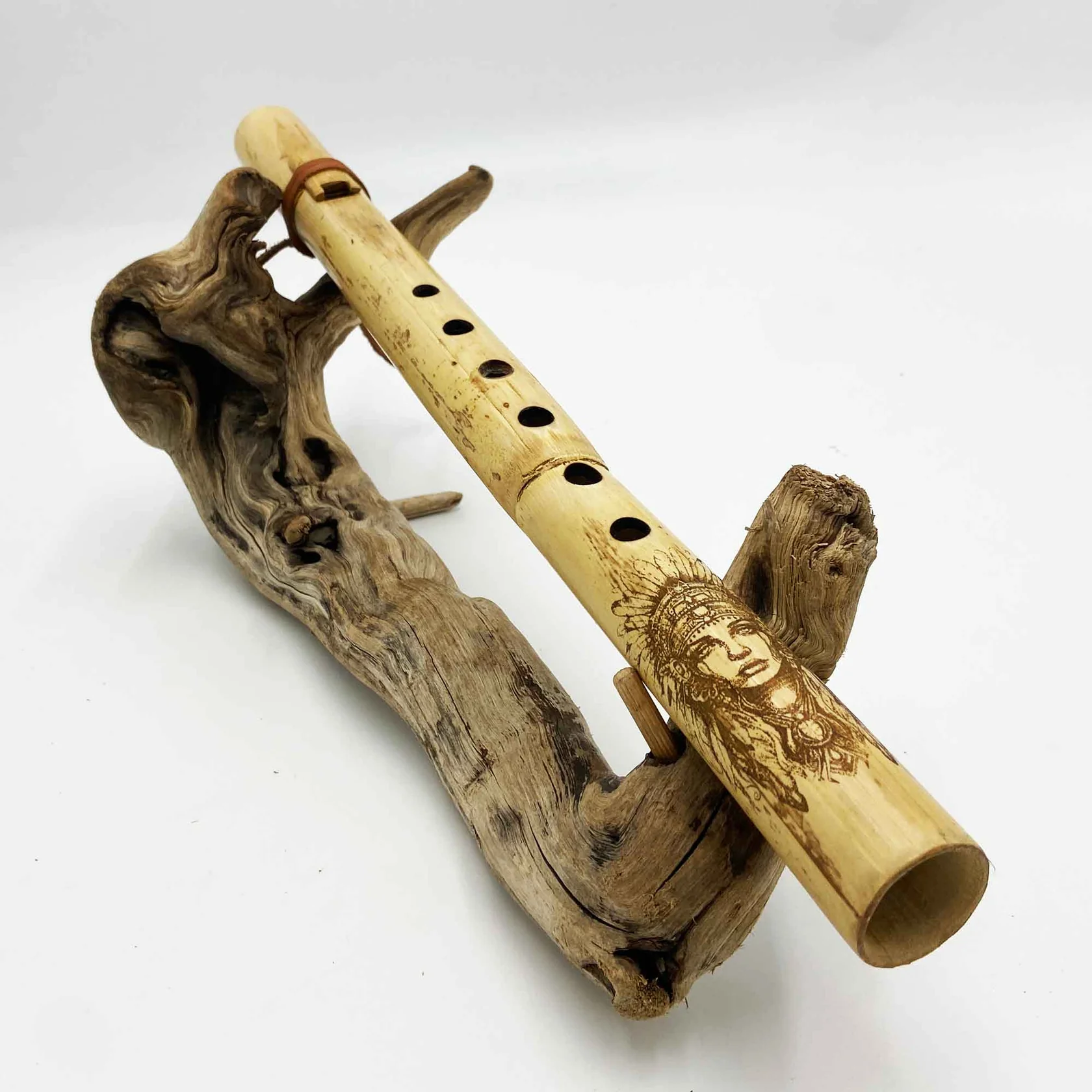
The frequency
"A note is not just a frequency. It's a vibration that meets a breath."
Tuned one by one, by ear, Leza Art flutes settle on 432 hertz — a frequency often associated with relaxation and meditation. Nothing dogmatic here: simply a pitch that soothes, and a slower music, made for the breath.
The legacy
I don't simply make flutes. I shape instruments that will carry a story.
Every piece leaves with its wood, its note, its gesture — and someone, somewhere, will place their breath on it. That transmission is what keeps the workshop going: knowing that a flute made here will accompany years of meditation, evenings, and silences.
The artisan — Leza Art
The first breath
Each flute is one of a kind — once it's gone, it's gone.